The Progression of Multiplier Systems in Successive Generations of Reel Entertainment Technology
Carlo Hoffmann · Aug 12, 2026
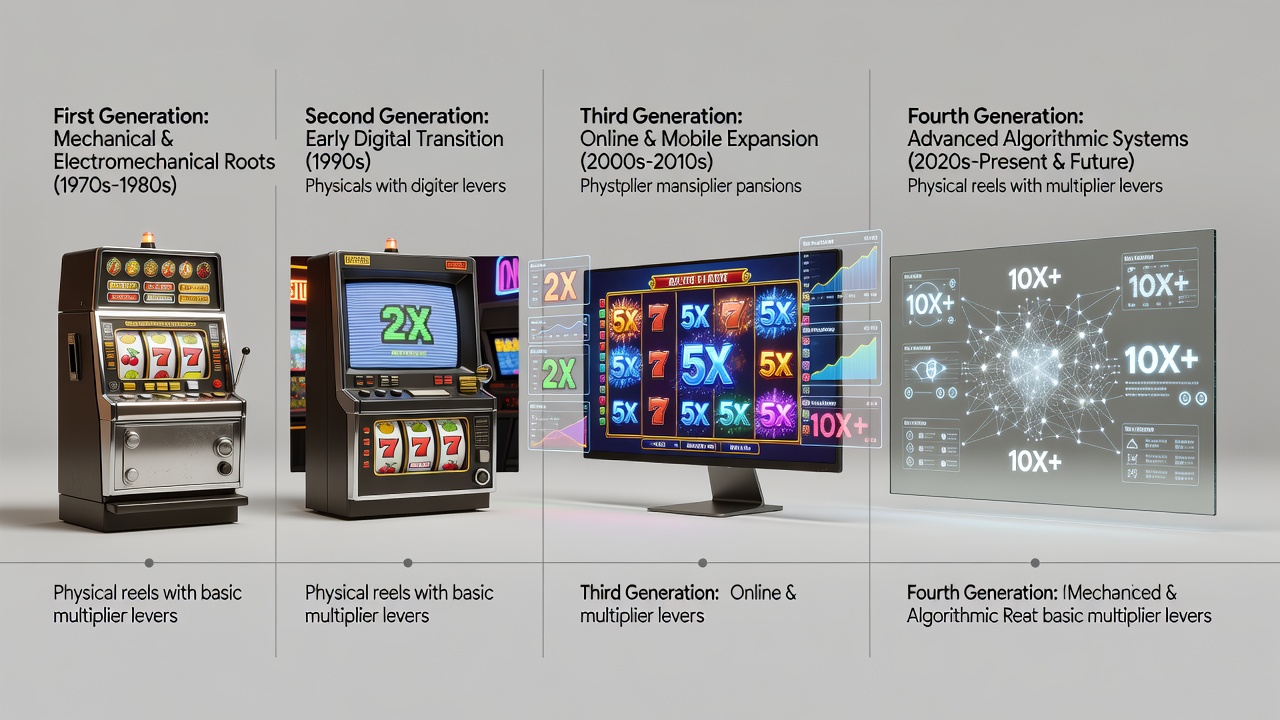
The Progression of Multiplier Systems in Successive Generations of Reel Entertainment Technology
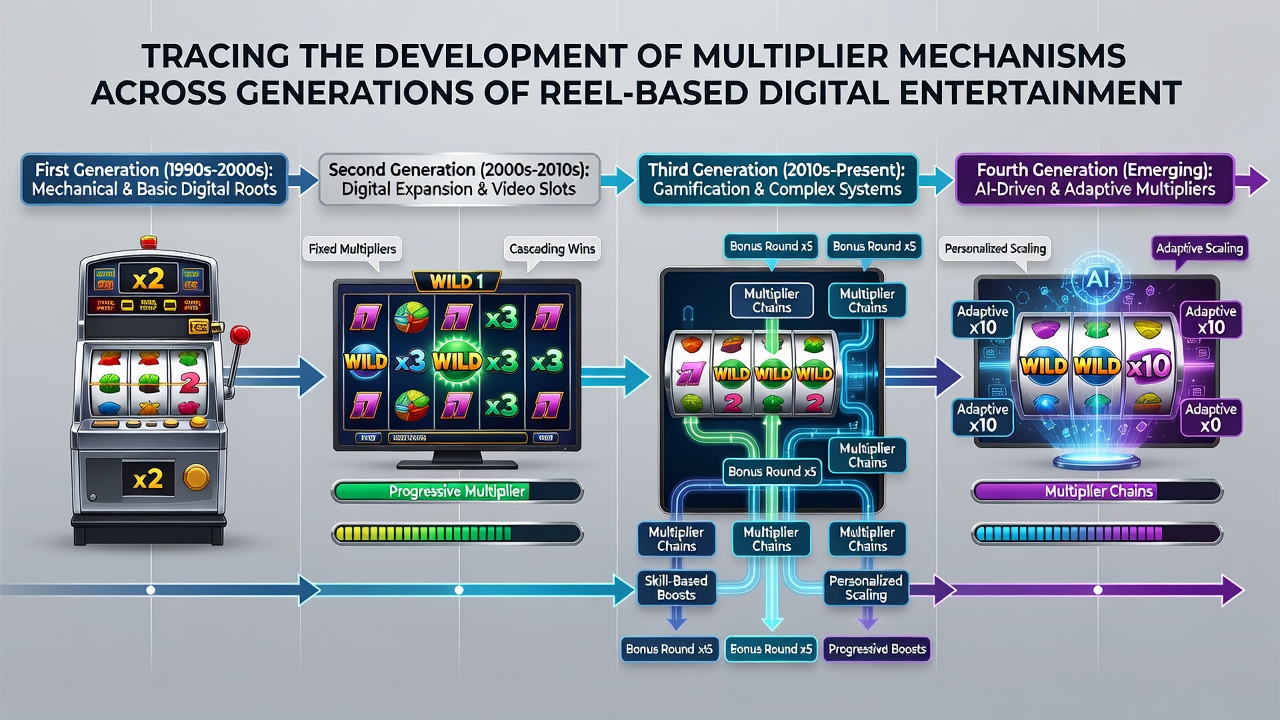
Multiplier mechanisms have evolved steadily across reel-based systems since the earliest mechanical designs, and researchers trace their path through successive technological shifts that altered how rewards accumulate during play sessions. Early lever-operated machines incorporated fixed multiplier symbols that doubled or tripled line payouts when specific combinations landed, while later electromechanical versions added stepped-up multipliers triggered by reel stops. Data from industry reports indicate these foundational features laid groundwork for more dynamic implementations once digital processing entered the picture.
Early Mechanical Foundations and Basic Multiplier Logic
Mechanical reel systems relied on physical symbol placement to deliver multipliers, and observers note that manufacturers positioned high-value icons in patterns that created automatic doubling effects when aligned across paylines. Those early configurations used simple arithmetic rules embedded in the payout table itself, yet the approach produced predictable outcomes that players could map through repeated observation. Transition periods between pure mechanical and hybrid machines introduced solenoid-driven stops that allowed multipliers to activate conditionally based on reel position sensors.
Studies of archived casino records show multiplier frequency remained low in these generations because physical reel layouts limited symbol density, and engineers compensated by tying larger multipliers to rarer three-reel alignments. The ball remained in the designers' court as hardware constraints dictated how multipliers could scale without introducing mechanical jams or excessive wear on components.
Digital Transition and Programmable Multiplier Layers
Video reel platforms expanded multiplier options dramatically once random number generators replaced physical reels, and experts observe that software allowed multipliers to stack across multiple game phases rather than remaining static. Initial digital implementations introduced wild symbols carrying fixed multiplier values that applied to any winning combination they completed, while subsequent updates added progressive multipliers that increased with each successive win in a single spin sequence.
Figures from regulatory filings in Nevada reveal steady growth in the proportion of titles featuring layered multiplier systems after 2005, and similar patterns appear in data collected across multiple jurisdictions. Developers began separating base-game multipliers from those reserved for bonus rounds, which created distinct engagement rhythms that extended session lengths without altering core reel mathematics.
Mobile Era Refinements and Real-Time Multiplier Adjustments
Portable platforms introduced touch-responsive multiplier displays that updated in real time as symbols clustered or cascaded, and analysts note these visual feedback loops encouraged continued play by making multiplier growth immediately visible. Research indicates mobile reel systems often employ adaptive multiplier algorithms that scale values according to player bet size, a feature absent from earlier generations limited by fixed payout tables.
August 2026 data compiled by the Nevada Gaming Control Board shows continued revenue contribution from titles that emphasize multiplier progression mechanics, while parallel reports from the Australian Communications and Media Authority highlight comparable trends in that market. Engineers refined reel-stop adaptation routines so that multiplier triggers could respond to partial symbol matches, thereby increasing perceived frequency without changing underlying probability distributions.
Clustering Algorithms and Their Influence on Multiplier Scaling
Contemporary systems integrate clustering detection to determine when multipliers should escalate, and those who've examined codebases describe routines that tally adjacent matching symbols before applying escalating factors. This method replaced older line-based calculations and permitted multipliers to reach higher ceilings within shorter timeframes. Industry associations such as the European Gaming and Betting Association have documented how these clustering approaches spread across markets after initial adoption in select European studios.
Academic papers from university gaming labs further map correlations between multiplier visibility and extended play intervals, showing that players remain engaged longer when multipliers display incremental growth rather than jumping to final values instantly. Yet hardware limitations on early mobile devices required simplified multiplier animations that later generations rendered with full particle effects once processing power increased.
Conclusion
The trajectory of multiplier mechanisms demonstrates consistent adaptation to each new technological platform while preserving core reward-accrual principles established in mechanical eras. Regulatory statistics and engineering records together illustrate how successive generations expanded multiplier complexity without discarding foundational logic, and current implementations continue to build on those established patterns through refined software layers. Observers tracking these developments expect further integration with emerging interface technologies as reel systems advance beyond current touchscreen standards.